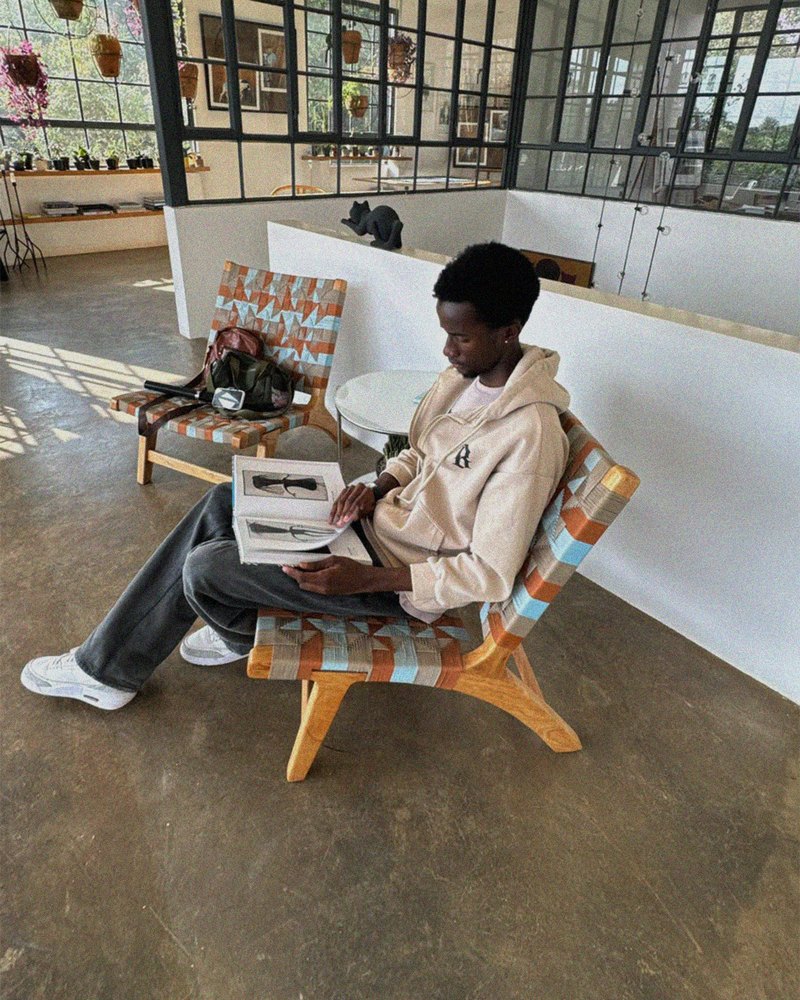
Oxydust is a Kenyan artist who works across charcoal, graphite, acrylics and oils. The human figure, identity, spirituality and “the invisible forces that shape our lives” sit at the centre of the work. He has shown at Creative Arena and the Affordable Art Show, and he is still learning how to let a painting breathe.
We asked eleven questions: about starting out, about what art is for in a fast and online world, about what it is really like to make a living in Kenya, and about how a young artist gets into a gallery. His answers are below, in his own words. You can follow the work on Instagram at @oxy.dust.
At a glance
- Mediums
- Charcoal, graphite, acrylics, oils
- Subjects
- The human figure, identity, spirituality
- Influences
- Renaissance art, Leonardo da Vinci, literature, poetry
- Shown at
- Creative Arena, the Affordable Art Show
- Find him
- @oxy.dust
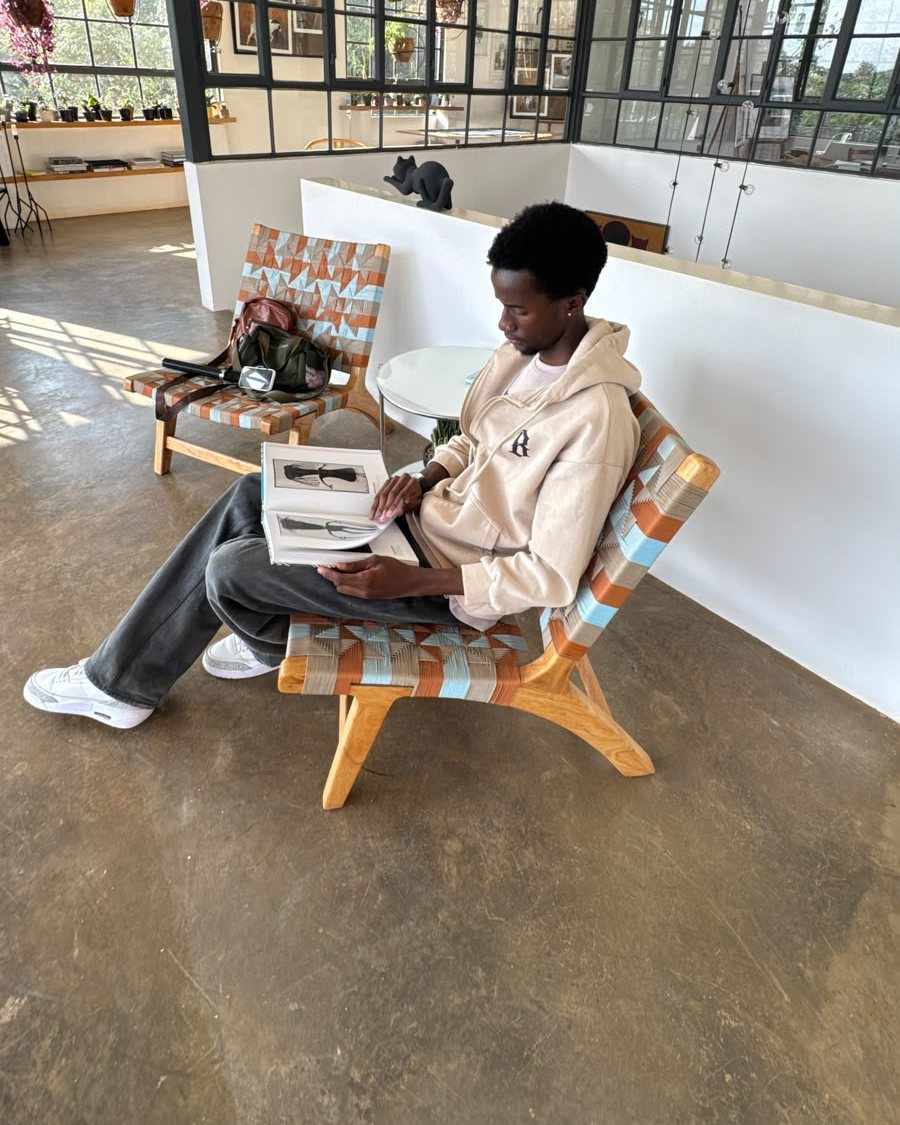
On you
How did you start making art, and when did it become a serious path rather than a hobby?
I’ve always had an urge to express myself through art. For me, it wasn’t necessarily something I consciously decided to pursue; it was more of a natural inclination to communicate through images, drawing and visual expression.
Over time, I started taking my practice more seriously, particularly when I began exploring painting. What initially felt like personal expression gradually became something I wanted to dedicate my life to. Getting commissions, participating in exhibitions and seeing people connect with my work made me realise that this could be more than a hobby.
I’ve since come to see art not just as something I do, but as a language through which I understand myself and the world around me.
How would you describe your work to someone who’s never seen it?
I’d describe my work as an exploration of human existence, emotion and the things we don’t always have the language to explain.
I’m particularly interested in the human figure, identity, spirituality and the invisible forces that shape our lives. I like creating work that makes people pause, contemplate and perhaps experience something they hadn’t considered before.
I work across different mediums, including charcoal, graphite, acrylics and oils. I don’t necessarily want to confine myself to one particular style. I’m more interested in developing a visual language that allows me to communicate different ideas and experiences.
Ultimately, I want my work to evoke something in people.
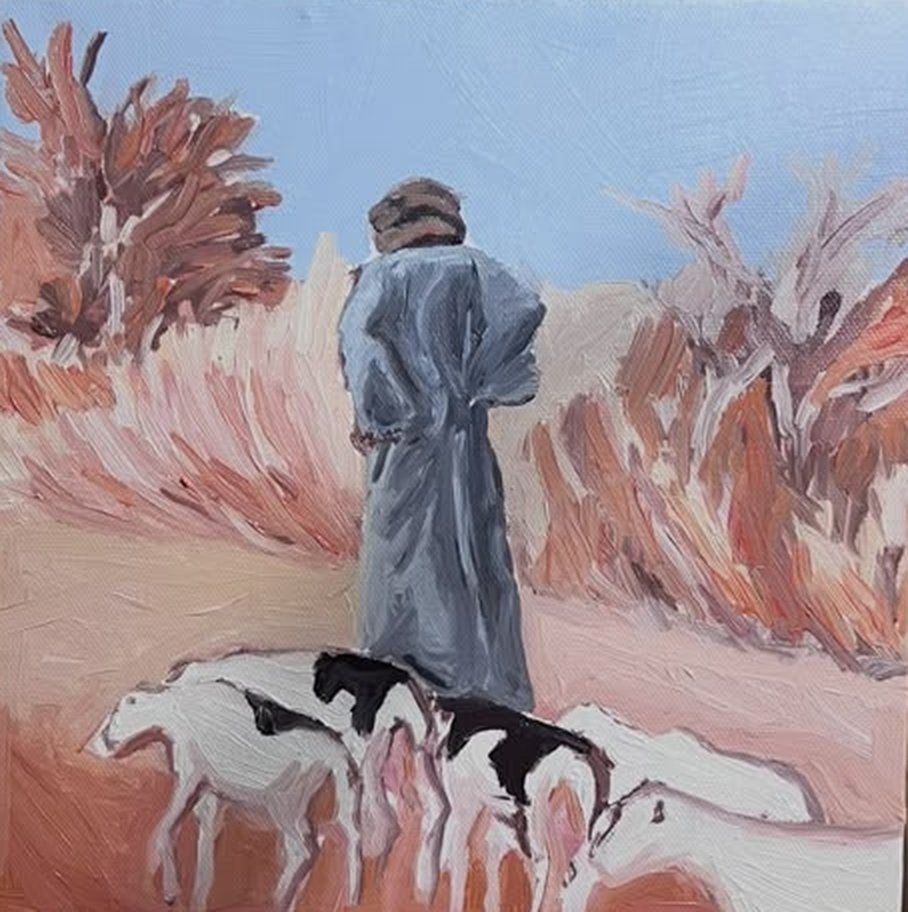
Who or what shaped your style the most, and what do you still struggle with?
My influences come from quite a broad range of things: Renaissance art, literature, poetry, human experiences, society and the cultural environments we grow up in.
I’ve always been fascinated by the way Renaissance artists approached the human body, composition, light and emotion. Artists such as Leonardo da Vinci have influenced how I observe and study the human figure.
But I wouldn’t say my influences are exclusively artistic. Sometimes a conversation, a book, an experience or simply observing people can influence the way I approach a painting.
One thing I still struggle with is finding a balance between technical perfection and freedom of expression. Sometimes I become too concerned with getting things right that I forget to allow the work to breathe. I’m learning to trust intuition more and not over-control every aspect of a painting.
Art in general
What do you think art is for right now, in a world this fast and this online?
I think art is more important now than ever.
We live in a world where almost everything is designed to compete for our attention. We’re constantly consuming information, images and opinions, often without having enough time to process any of it.
I think art provides an opportunity to slow down. It gives us room to reflect, question things, feel and engage with experiences beyond our immediate realities.
Art doesn’t always have to provide answers. Sometimes its greatest purpose is to ask questions or make someone feel something they cannot quite explain.
I also think art preserves aspects of humanity that might otherwise be overlooked. It gives us a way to document who we are, what we experience and how we understand the world at a particular moment in history.
Has social media changed how you make art, or how people see it?
Absolutely. Social media has made art more accessible. Artists can now share their work with audiences beyond their immediate geographical environments without necessarily having gallery representation.
For an emerging artist, that’s a significant opportunity. It allows you to build an audience, showcase your process, attract commissions and connect with other creatives.
However, I think there’s also a downside. Social media can sometimes make artists feel pressured to produce work that performs well online rather than work that genuinely interests them.
There’s a difference between creating something meaningful and creating something that is immediately engaging on a screen.
I think the challenge is learning how to use these platforms without allowing algorithms, trends and engagement metrics to dictate your artistic direction.
Art in Kenya
What makes Kenyan art feel like Kenyan art to you? Is there a look, a story or a theme only we have?
I think Kenyan art is deeply connected to our experiences, environments, histories and cultural diversity.
There’s something very interesting about how our everyday lives become material for artistic expression. Our cities, rural communities, traditions, social structures, politics, relationships and even the contradictions within our society all provide incredible material for artists.
I wouldn’t necessarily say Kenyan art has one particular look. I think that would be limiting. We have artists working in completely different styles, mediums and disciplines.
What makes the work distinctly Kenyan isn’t always the visual appearance. Sometimes it’s the perspective, the context, the experiences and the stories informing it.
I think our strength lies in that diversity. We have so many stories that haven’t been explored or represented enough, and I believe there’s enormous potential in how Kenyan artists can interpret and communicate those experiences to the rest of the world.
What is it like to make a living as an artist here? What do people get wrong about it?
Making a living as an artist in Kenya can be challenging, particularly when you’re starting out.
One of the biggest challenges is that people don’t always understand the amount of time, skill, resources and thought that go into creating artwork. They might see the finished painting without considering the years of practice, materials, experimentation and labour behind it.
There’s also the challenge of finding consistent opportunities and building a market for your work.
I’ve come to understand that being an artist also requires you to learn about business, marketing, networking, pricing and managing clients. You can’t rely on creativity alone if you want to sustain yourself professionally.
I also think we need to move away from the idea that art is simply a hobby or something people pursue because they have nothing else to do.
Art is labour, it is intellectual work, and it deserves to be valued and compensated accordingly.
The future and direction
Where do you see art going in the next five to ten years, in Kenya and globally?
I think we’re moving towards a period where the boundaries between different creative disciplines will become increasingly blurred.
Painting, illustration, animation, film, digital art and interactive experiences will continue influencing one another. Artists won’t necessarily have to operate within one medium or one industry.
In Kenya, I think there’s enormous potential, particularly among young creatives. We have talented people, interesting stories and a growing creative community. What we need is stronger infrastructure, more investment, better opportunities and spaces that allow artists to experiment and develop professionally.
Globally, I think the challenge will be maintaining originality and human perspective in an increasingly technology-driven creative environment.
Personally, I’d love to see more Kenyan artists participating in international conversations while remaining connected to the experiences and stories that inform their work.
How do you feel about AI and digital tools in art? Is it a threat, a tool or both?
I think it’s both, depending on how it’s used.
Technology has always influenced artistic development. Photography, digital illustration, animation software and other technological advancements have all changed how we create and experience art.
I don’t think artists should automatically reject new tools. They can make certain processes more efficient, expand creative possibilities and help people explore ideas they might not otherwise have been able to execute.
However, I do have concerns about originality, copyright, artistic ownership and the way AI systems are trained using existing artists’ work.
I also think there’s something valuable about the human process of creating art: the decisions, mistakes, experiences and intentions behind a piece.
For me, technology should expand what an artist can do, not eliminate the importance of having something meaningful to communicate in the first place.
Galleries and expos
How much do galleries and expos matter for an artist starting out, and how can a young artist get into one?
I think galleries and exhibitions are extremely important, especially for emerging artists.
They provide opportunities to have your work experienced outside a digital screen. There’s something different about standing in front of an actual painting, observing its scale, texture and details.
Exhibitions also create opportunities to meet collectors, curators, fellow artists and people who can open doors to other opportunities.
For a young artist looking to get involved, I’d recommend starting with research. Find out which exhibitions are happening, understand their submission requirements, prepare a strong portfolio and apply whenever opportunities arise.
You don’t necessarily have to wait until you feel like an established artist. Participate in group exhibitions, attend openings, connect with other artists and become part of the creative community.
My own experience participating in Creative Arena and the Affordable Art Show has taught me how valuable these spaces can be for exposure, learning and connecting with people.
How a young artist gets into an expo
- Research. Find out which exhibitions are happening and what they ask for.
- Build a portfolio. Prepare a strong one before the call comes.
- Apply. Whenever an opportunity opens, even before you feel established.
- Show up. Join group shows, attend openings, meet other artists.
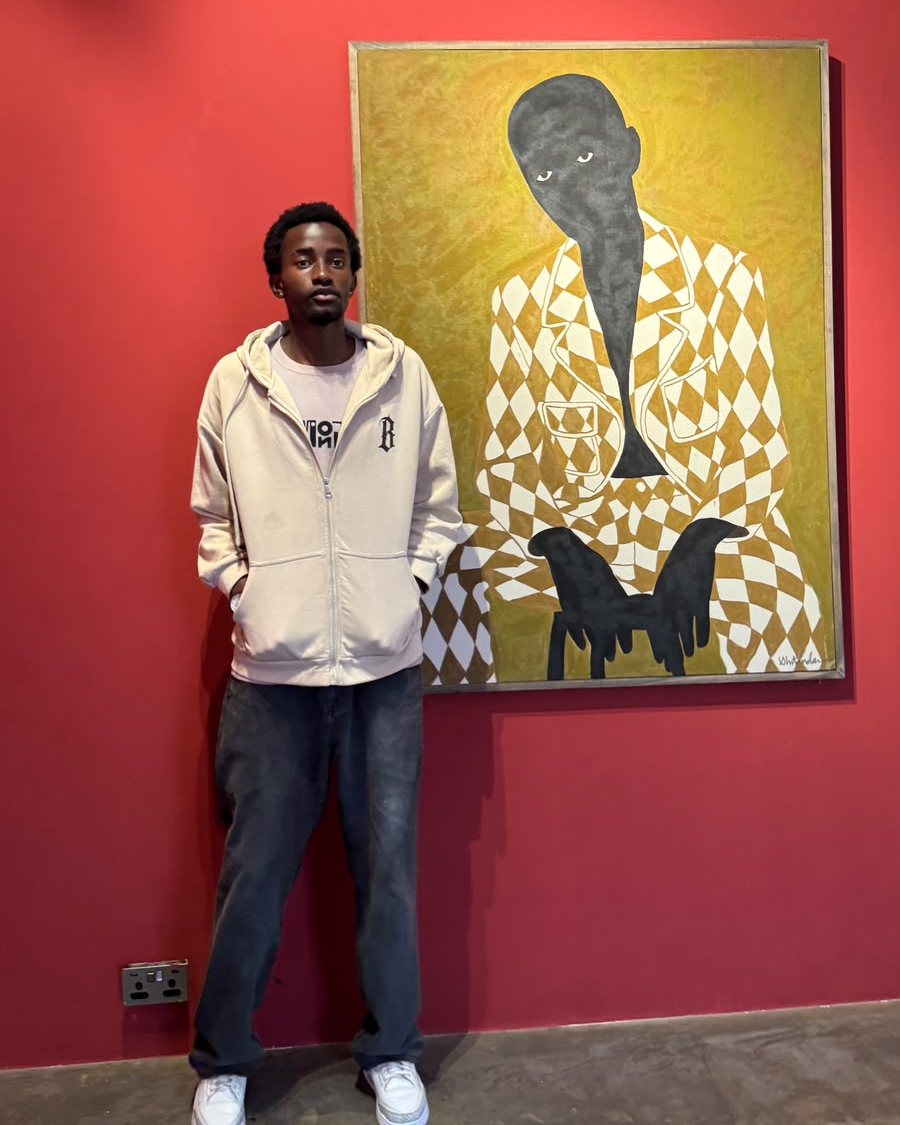
What would you change about the gallery and expo scene in Kenya? Is there a space or event you’d recommend?
I’d love to see more opportunities for emerging artists, particularly opportunities that don’t make participation financially inaccessible.
I think we need more consistent exhibitions, better promotion of artists, stronger relationships between galleries and collectors, and more educational opportunities for young creatives.
I’d also like to see more collaboration across disciplines. Art shouldn’t always exist in isolation. There are interesting possibilities in bringing together painters, photographers, filmmakers, animators, sculptors and designers.
In terms of spaces and events, I’d recommend looking into the Affordable Art Show organised by the Kenya Museum Society, particularly for artists interested in exhibiting and connecting with collectors.
Creative Arena is another platform worth exploring, especially for younger and emerging artists.
I’d encourage young artists to attend exhibitions even when they’re not participating. Sometimes simply being present, meeting people and understanding how the art scene operates can be the beginning of something significant.
Ultimately, I think we need an art ecosystem where artists aren’t just given opportunities to exhibit, but are also supported in building sustainable creative careers.
Where to start
Affordable Art Show
Organised by the Kenya Museum Society. Good for artists who want to exhibit and meet collectors.
Creative Arena
A platform for younger and emerging artists.